Education has been always acknowledged as the most powerful tool for social transformation , but unfortunately for many children living on the margins of society, access to meaningful learning remains a distant dream. This is where Pehchan – The Street School comes into picture not only by teaching lessons from textbooks but by nurturing dignity, confidence and hope. It is built up on the belief that every child deserves respect , the right to have dreams and opportunities regardless of the background they come from. Among its many initiatives and partnerships the recent collaboration with Team Ikkis emerged to be a significant moment that reflected what we call as a purposeful engagement between art, empathy and education.
At Pehchan – The Street School classrooms are not defined only by walls but are shaped by stories , resilience and the determination of children and Pehchan – The Street School who refuse to let circumstances define children’s future. The volunteers of Pehchan the street school work relentlessly to ensure learning is meaningful, nurturing and empowering. It was when Team Ikkis arrived not as a distant figures from the film industry but as an individual willing to engage , connect and listen.
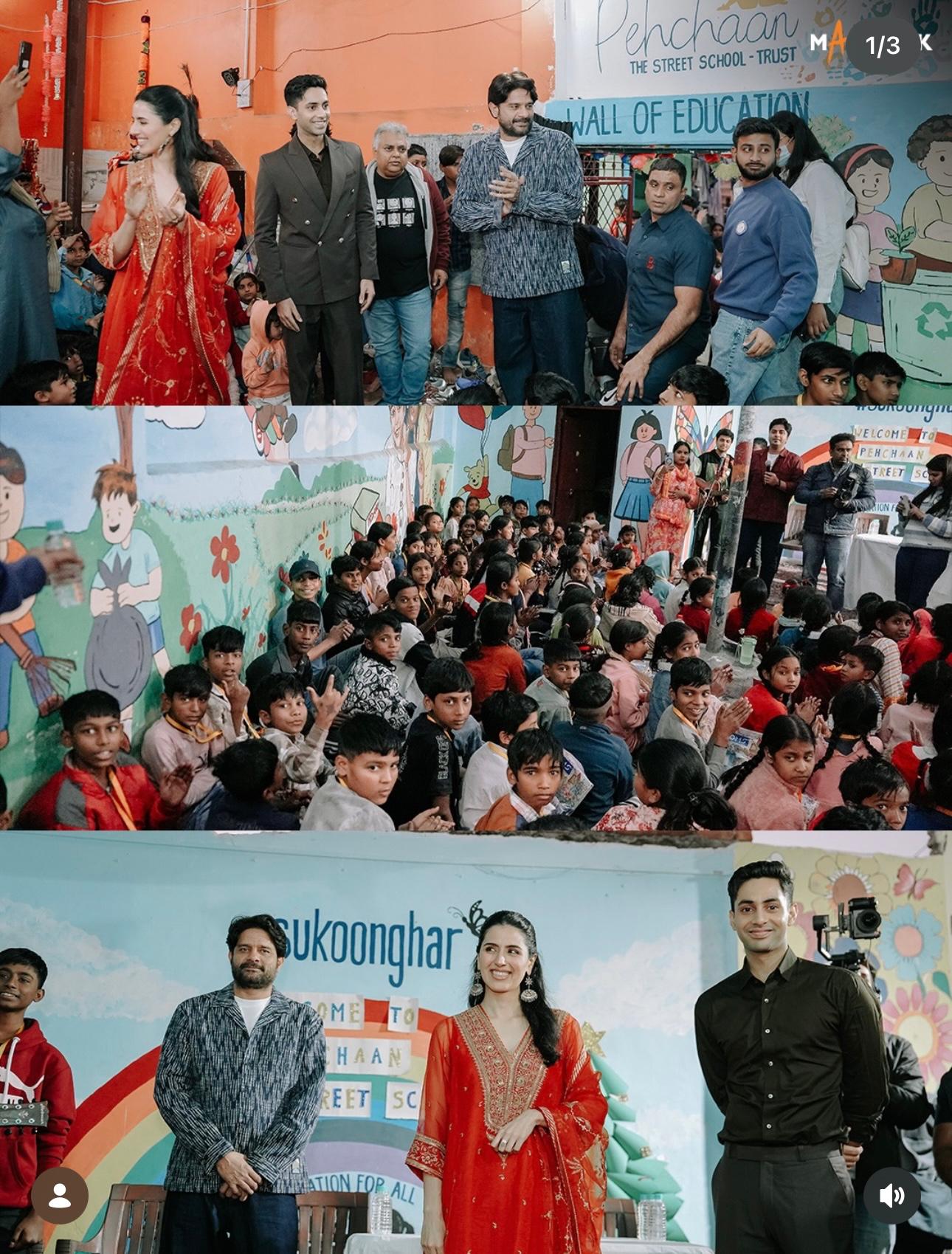
The collaboration with team Ikkis was not framed as a promotional exercise or a symbolic visit but rooted in genuine interactions. The film Ikkis, which is inspired by sacrifice, determination and real – life heroism, often carries a narrative that perfectly resonates with the values that Pehchaan The Stress School holds. Stories of perseverance , courage and moral strength are not unfamiliar for these children who are experiencing them daily . It was this shared emotional grounding that elevated the visit beyond a mere scheduled interaction, turning it into a deeply meaningful experience.
The visit began on a heartfelt note as the children of Pehchaan the street school welcomed team Ikkis with a soulful rendition of “Tu hai Toofan, Tu hai Toofan , Dil hai mitti , Dil hai mitti”. Their voices filled with innocence and courage set the tone for an interaction rooted in emotion, resilience, and shared humanity. As the members of Team Ikkis interacted with the students , excitement filled the whole room. The curious little eyes of the children followed every word and the children became more interactive . The children at Pehchaan – The Street School listened attentively , laughed freely and made many pictures and drawings with the cast as well. Most importantly what stood out was not the glamour associated with filmmaking, but the humility and warmth with which team Ikkis approached the children.
Conversations flowed naturally, which not only were not only focused on films but on dreams, effort, failures and the strength to keep moving forward and never giving up.
These conversations held immense value not only for the students but also for the team of Pehchaan the street school. It is only when these underprivileged children hear honest stories of struggle and perseverance and determination it challenged the invisible barriers children often internalise and replacedthem with possibility.
Interactions like these become a bridge between the two worlds. Cinema, which is often viewed as an escape, found deeper meaning within the classrooms of Pehchaan. As narratives were shared the children of Pehchaan – The Street School recognised reflections of their own resilience and strength . Through these interactions they realise that their lives often carry stories that are worth telling. These realisations fostered confidence and self expression, reinforcing the idea that every voice matters.
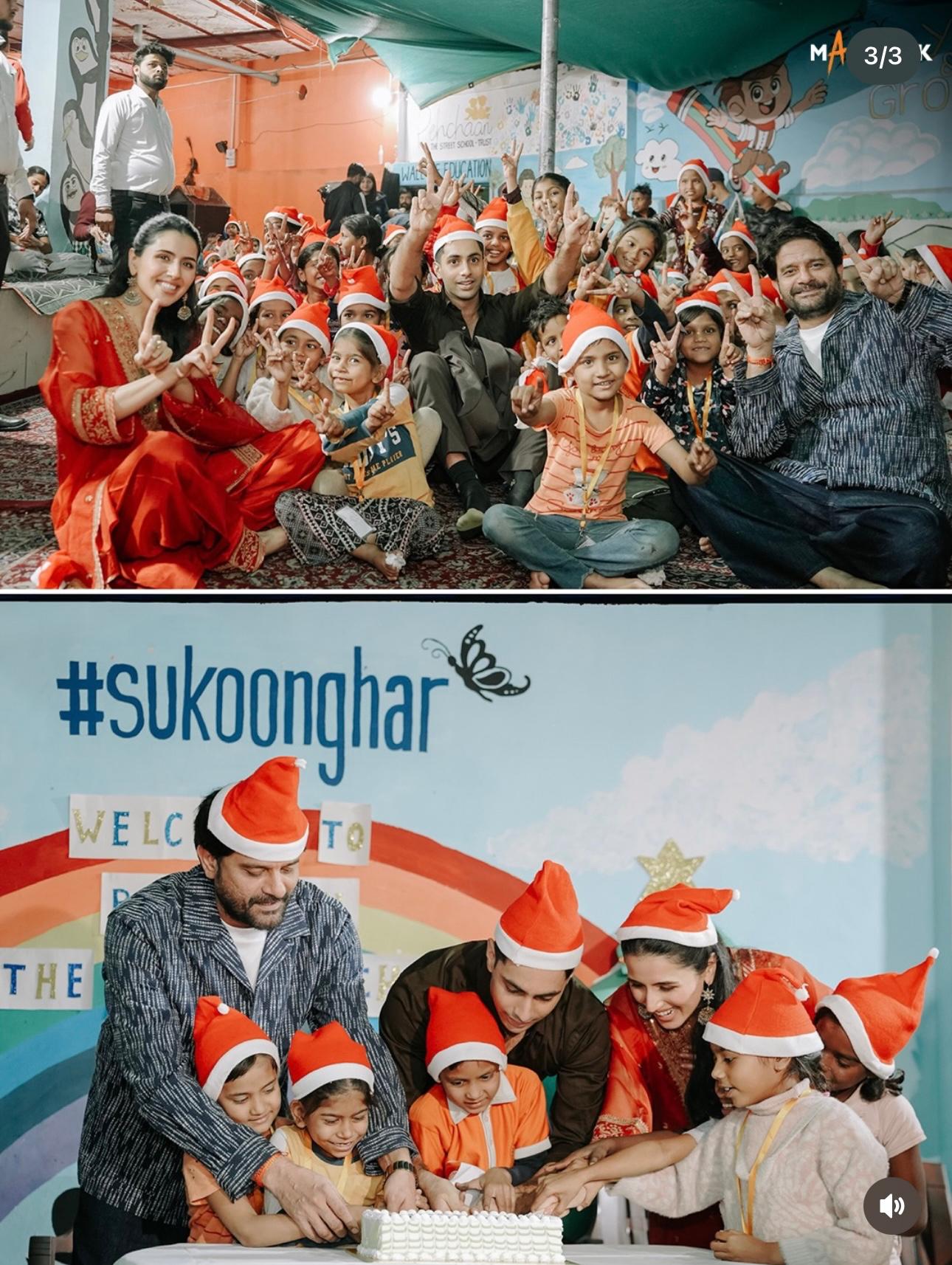
The interaction grew stronger when children of Pehchaan – The Street School presented handmade cards stating “Thank you for visiting Pehchaan – The Street School” to the cast of the Ikkis. Crafted with bright colours, drawings and simple yet powerful words,each card reflected the excitement , gratitude and sense of connection. As the cast received these cards they took time to read, smiling at the honesty and warmthexpressed through every line and sketch. What seemed like a small gesture carried intense emotional value , reminding everyone present that appreciation expressed from the heart needs no sophistication. The celebration also continued through a cake cutting ceremony turning the moment into one of shared happiness and togetherness. Laughter echoed through the space as children gathered around, clapping, cheering, and celebrating alongside the Ikkis team. There was no divide between guests and hosts—only a shared sense of belonging. The cast interacted freely with the children, acknowledging their efforts, encouraging their creativity, and making each child feel seen and valued.
While team Ikkis remained the central focus of this collaboration, Pehchaan- The Street School’s journey has been supported by several other meaningful engagements. Interactions with the actors like Yashvi Bagga, festive celebrations with personalities like Kirandeep Rayat, and participation in awareness oriented promotional events had added depth to pehchaan’s outreach. These collaborations reflect a shared mission of supporting education and inclusion.
Such engagements often highlight the broader importance of collaborations in driving social change.
At Pehchaan -The Street School collaboration is approached with sensitivity and intention. Children are never treated as passive beneficiaries of attention. Instead they are always encouraged to actively ask questions and express themselves freely. Moments like these may be brief but carry a long-lasting impact as these realisations fostered confidence and self expression, reinforcing the idea that every voice matters.
The atmosphere during the visit was filled with warmth and celebration. It is when public figures sitalongside children, listen attentively and engage with sincerity , invisible barriers dissolve. For Pehchaan – The Street School, partnerships are not isolated moments but part of a continuous journey. Each engagement strengthens a culture of aspiration and empathy. The collaborations with team Ikkis added meaningful chapters to this journey, reaffirming the belief that education thrives when it is supported by community and shared responsibility.
One of the most moving moments of the collaboration between team Ikkis and Pehchaan – The Street School unfolded not through words, but through colours, crayons and quiet observations. Children were also seen expressing their thoughts and expressions through art and drawings and what emerged on paper was a powerful reflection of their understandings of courage, sacrifice and nationhood. Drawings depicted army men- standing tall at borders, protecting the land, shielding families, and carrying the weight of responsibility with pride. For such young children, visualizing strength and service with such clarity was deeply stirring.
Team Ikkis took time to observe and did not rush through the activity or treat it as a formality. Conversations between team Ikkis and the children often revealed not only creativity but a remarkable emotional maturity. They also shared insights inspired by the children’s artwork, speaking about real – life heroes , discipline, selflessness and the unseen sacrifices made by those who serve the nation. They also encouraged children to recognise the strength they already carried within themselves, the ability to stand firm, to care for others and to dream despite limitations. The interaction became a shared learning moment, where inspiration flowed both ways. For the children being heard and taken seriously by people they admired created a sense of pride and confidence that cannot be measured.
The importance of this collaboration with Pehchaan – The Street School lies precisely in such moments. It demonstrates how education extends beyond academics into emotional intelligence, creativity and self- expression. Art became a language through which children communicated values they had absorbed from their surroundings such as courage, hope and perseverance.
Pehchaan – The Street School envisions a future where learning spaces remain inclusive, safe and at the same time empowering. Collaborations with team Ikkis reinforce the idea that art and education together can inspire transformation. When creative voices meet grassroots realities with sincerity, the result is solidarity rather than spectacle. They bridge the gap between imagination and reality , showing young minds that their thoughts are valued by the world beyond the immediate environment .What also emerged importantly was that they reaffirm that inspiration does not always come from grand speeches but often from quiet conversations, shared reflections and sincere attention. In the end little stars may carry the biggest dreams, but it is belief that allows those dreams to truly shine. The collaboration between team Ikkis and Pehchaan – The Street School went far beyond just a simple visit or interaction. It became a meaningful coming together of shared values, lived stories and a collective sense of purpose. Within classrooms filled with curiosity, hope and quiet resilience, cinema found compassion and inspiration met genuine opportunity. Moments like these are a reminder to us that when society chooses to invest in children with respect, empathy and sincerity, it does more than shape individual lives it lays the foundation for a future that is brighter, more inclusive and deeply human for everyone.
In witnessing children draw soldiers with hope in their eyes Team Ikkis witnessed the power of belief taking shape. And in those very moments, Pehchaan – The Street School once again proved that when empathy meets education it creates an impact that is not confined to classroom walls but moves far beyond it.
Moments like these remind us that when children are met with kindness and belief , then even the smallest gestures turn into memories that shape hopeful, confident futures.
 Site Title