
Not every lesson in college comes from textbook- some come from the Indian Constitution…… But only if you know them!!!
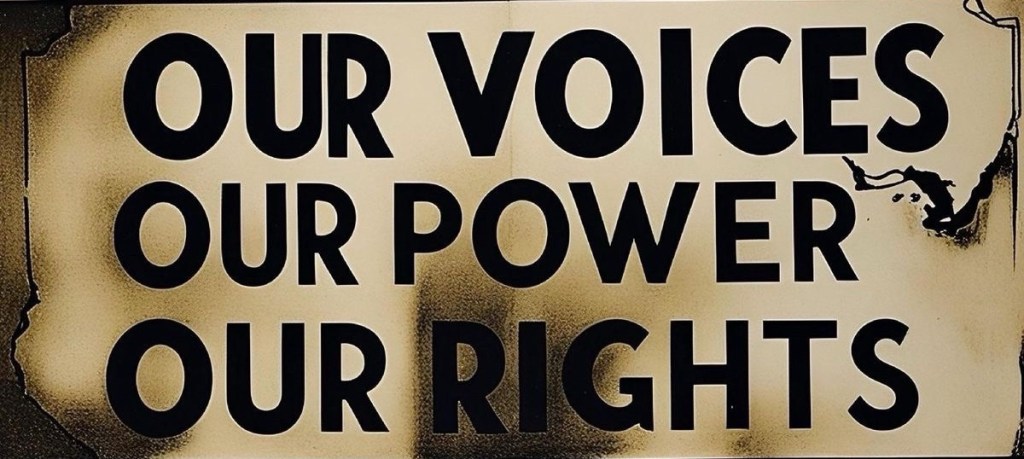
College teaches you equations, theories and data’s but do not forget it is also a place where your fundamental rights enshrined in our Powerhouse Constitution walk along. And those lessons can protect you long after you graduate.Whether you are in your classroom, library or your hostel room, the law always have your back. But it can only protect you if you know how to use it.
Before we talk about various various rights which is granted to us it is better to know from where it is derived i.e.
What exactly is the Indian Constitution???
Standing tall above every other law, every institution and every individual of this country: the Indian Constitution is not just a legal document, it is the guiding light , it is the nation’s heartbeat and a supreme law of the land. From the moment we are born , its promises surrounds us- which ensures our freedom, equality and justice.
The Constitution of india, which took 2 years 11 months and 18 days to draft and finally adopted on 26th November (regarded as Constitution Day ),1949 and enforced on 26th January 1950 .As rightly stated in law by a famous jurist of sociological school named Roscoe Pound that ” law evolves with the need of society” hence for its adaptibility the constitution has been amended 106th times and the latest one was in the year 2023.Indian constitution being the lengthiest constitution of the world has 395 articles divided into 25 parts and 12 schedules. Being both a legal document and a guiding light in India’s democratic journey , constitution stands tall.
Moving forward to the rights hence the list starts with:
- Right to education and equality:
Article 14: Equality before law , where the laws says every citizen must be treated equally and law should protect every citizen of this country.
Article 15: Prohibiting the discrimination on grounds of religion,race,caste,place of birth or sex, which also means that your admission or treatment in college cannot depend on these stated factors.
Article 21A; of the Indian constitution guarantees every child the right to free and compulsory education from ages 6 to 14.While this provision directly applies to school level education it’s impact echoes all the way to college gates.It is because without strong primary education, the journey to higher education becomes almost impossible. Students who miss out on basic schooling are far less likely to ever step into college classroom. Hence being a college students, this is not just statistic- it’s a reminder of privilege and responsibility .The very fact that you are on campus means the system worked for you, at least in part.But for millions of children, the dream ends before it begins.
Therefore if Article 21A of the Indian Constitution is the seed, the colleges are the following trees.Without nurturing that seed, the garden of higher education can never truly be equal or inclusive.
2. Protection against Sexual Harassment:
The Protection of Sexual Harrassment Act,2013 works in protecting students from sexual harrasment in colleges. You have the right to complain without fear of punishment or retaliation . It’s your voice and you have full right to speak about it .
3. Safeguard against Ragging:
The hon’ble Supreme Court has declared ragging a criminal offense.The University Grants Commission (UGC) has also laid down regulations to curb ragging including punishments for those involved. It can also be prosecuted under various sections of Indian Penal Code 1860 now Bhartiya Nyaya Sanhita 2023, including those related to assault-351 IPC/130 BNS, wrongful restraint-339 IPC/126(1) BNS, criminal intimidation-503 IPC/351(1) BNS,and abetment to suicide- 306 IPC/108 BNS, depending on severity of the act.Which can lead to punishments like suspension, expulsion or even imprisonment. And you can complain to police as well as college’s anti ragging cell.
4. Freedom of Speech and Expression:
Article 19(1)(a) ,gives you the right to share your opinions peacefully-whether in class debates,campus events or student publications. But while exercising this right you must always remember ” every right comes with a corresponding duty” so if you are exercising your right you must always remember the restrictions imposed on it under Article 19(2) i.e. speech that disturb public order, decency, morality , sovereignty and integrity of india etc.
5.Right to Privacy:
Enshrined under Article 21 of the constitution,the hon’ble Supereme Court in Puttaswamy judgement (2017) declared privacy a Fundamental Right. Which means that your college cannot search your room or belongings without a valid reason,or they cannot read your private messages or share your personal data without your consent.
6. Consumer Rights as a Student:
If you pay fees, you will be considered as a consumer under the Consumer Protection Act,2019. Which is a same rights as someone buying a product or service.There are even judgements from hon’ble Supreme Court in which it was held that educational institutions and examination boards are liable under Consumer Protection Act if they fail to provide services promised.
7. Right to information (RTI):
According to Right to Information Act,2005 empowers citizens- including students to access information from public authorities. Which means if your college or university is government-run, government-aided or funded by public money,you can use RTI to get official records and transparency.
8. Right to Safe Environment:
This means that every student has the legal right to study in an environment that is physically safe,hazard free and prepared for emergencies. Which entitles students to get safe campus infrastructure, lab and workshop safety , food safety in canteens, transport safety and emergency protocols. Also this right is not explicitly stated in constitution,but through time and again judicial pronouncements it is often interpreted within the Right to life (Article 21 ) of the Indian Constitution.
9. Right to Peaceful Protest:
A university isn’t just a place to earn a degree but it is also a training ground for leadership, courage and active participation.This right ,rooted in Article 19(1)(a) (freedom of speech and expression) and Article 19 (1)(b)(right to assemble peacefully without arms), empowers students to speak out against injustice, demand accountability ,and to shape the culture of their campus.From advocating for better facilities to raising your voice against unfair policies ,your stand can inspire others and bring real change.
That’s exactly what students at Army Law College , Pune are doing.With concerns over academic mismanagement and hostel overcrowding to lack of financial transparency and administrative biases,they described their peaceful protest as last resort.
Peaceful protest isn’t about chaos and disruption- it’s about dignified resistance and meaningful conversation.
Case Study 1: Bijoy Emmanuel v. State of Kerala (1986) – Right to Conscience on Campus
In this landmark case, three schoolchildren — Jehovah’s Witnesses — refused to sing the National Anthem, standing respectfully instead, because their faith prohibited them from singing any anthem except to God. The hon’ble Supreme Court held that forcing them to sing violated their fundamental rights under Article 19(1)(a) (freedom of speech and expression) and Article 25(1) (freedom of conscience and religion).
This judgment reminds us that students do not shed their constitutional rights when they enter a campus. Your right to express (or choose not to express) your beliefs peacefully is protected. Whether it’s wearing certain attire, expressing dissent in class discussions, or participating in symbolic protests, colleges cannot compel actions that infringe upon your conscience or lawful freedoms.
The case teaches that respecting diversity of thought is a cornerstone of campus life.
Case Study 2: Mohini Jain v. State of Karnataka (1992) – Education as a Fundamental Right
In this case the hon’ble Supreme Court struck down a policy allowing private medical colleges to charge exorbitant “capitation fees” for admission. The Court held that the Right to Education is a part of the Right to Life under Article 21, and education cannot be denied or restricted based on a student’s economic background.
For today’s college students, this case reinforces that access to education is not a privilege for the wealthy — it’s a constitutional guarantee. While Article 21A formally ensures free and compulsory education only up to age 14, the principles from Mohini Jain extend beyond school. Higher education, especially in public institutions, must remain affordable, inclusive, and free from discriminatory barriers.
Epilogue
Knowing your rights as a student is not just about being prepared for worst-case scenarios- it’s about empowering yourself to thrive, speak up and demand the standards that you deserve.A well informed student body is the strongest pillar of a just society.When you know your rights, you just don’t protect yourself- you inspire others,hold institution accountable and contribute to a culture where fairness and safety are non negotiable.
In the end I’ll just say
“Education empowers the mind-knowing your rights empowers your life”.
 Site Title