Where supports meets learning; A collaboration rooted in purpose.
Education, in its most authentic form, is always an accrual that happens in collaboration. The coming together of belief, hard work, and collaborative intervention defines education. Areas where education remains most precarious: the pavement, the spot beneath the flyovers, the stretch alongside construction zones, or the temporary shade structures are precisely where the mere existence of small educational facilities can be life-altering. The Pehchaan – The Street School & Bhagwati Paper Trading Company intervention is a strong reminder that sometimes what remains left unplugged by the system can be accomplished through coming together.
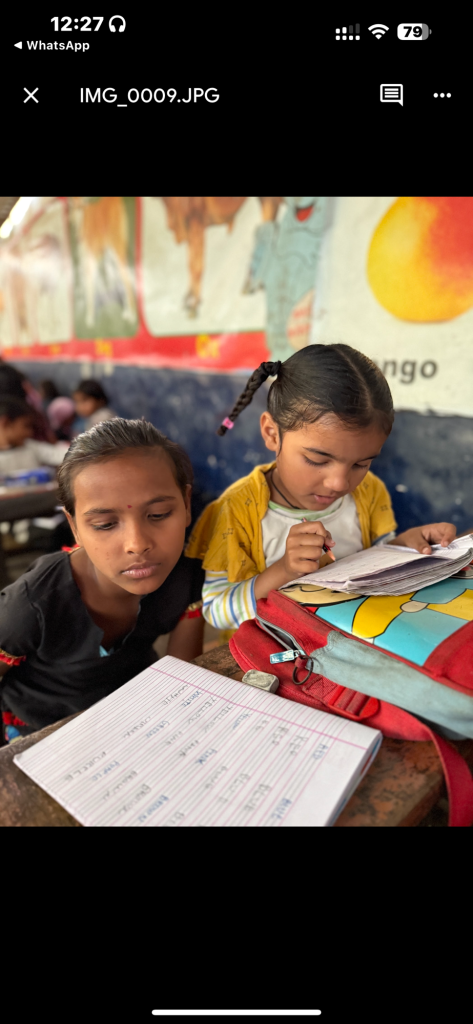
Pehchaan- The Street School has, for the last decade, been operating at the point of vulnerability as well as the point of hope. Founded on the ideology that every child in the world has the right to education, no matter the place of their birth or upbringing, Pehchaan- The Street School has established educational classes in places that never had them before. These classes are not necessarily marked by four walls and a roof. Sometimes, mats are spread on the ground, chalkboards resting against tree bark, and children seated with notebooks resting on their legs. The only thing that ties these classes together is the intent.
“In these learning spaces, stationery is no mere ancillary requirement, but an essential one. It is, in fact, an expression and symbol of confidence. The partnership with Bhagwati Paper Trading Company, in turn, is an opportunity for us to improve the foundation upon which our educational initiative, Pehchaan- The Street School, rests. In mainstream education, stationery is considered a given. In environments where children who attend mainstream schools are concerned, stationery such as notebooks, pens, and textbooks are considered basic essentials and are always available. In environments where children are on the streets or in disadvantaged socioeconomic situations, such basic stationery and supplies are considered luxuries they can never afford. In many of the children who attend Pehchaan’s education institution, families’ primary concern is mere survival.
The Bhagwati Paper Trading Company’s involvement hits this problem head-on. The program ensures that the students are supplied with all the necessary stationery and study material, and by the act, they ensure the students are not forced to disrupt their education because they are lacking some basic stationery. The action, in itself, is quite simple, but its effects are immense. When a child has its own notebook, it gives it an element of possession and self-respect.
But what makes it more significant is the manner in which it has been undertaken. Instead of taking up the role of a one-step donor, Bhagwati Paper Trading Company has joined the overall vision that Pehchaan- The Street School has. It is a recognition that social responsibility cannot be measured or worked towards through financial aid alone.
When it comes to support within the education sector, it can easily become symbolic, defined by a list and an annual report. But initiatives like this one challenge that trend. In choosing to partner with a grass-roots agency that is working directly with street-connected children, Bhagwati Paper Trading Company recognizes the truth about education inequality and acts on it not just for appearances’ sake.
This collaboration also marks a recognition of the fact that all enterprises, irrespective of size, could be involved in social change. In fact, the nature of the paper trading industry itself links it with knowledge, writing, and learning. An affiliation with education, therefore, comes as no surprise.
The use of appropriate learning resources also plays a major role in improving this aspect. Now, teachers can prepare lessons appropriately if they feel that every single student has access to note-taking resources. The students will be able to work on these areas on a daily basis, revise, and see how they are progressing. These are some minute factors that go on to make a major difference eventually.
Thus, the effort with Bhagwati Paper Trading Company enhances not only individualized learning outcomes but also the overall experience in the classroom. It enables the attention to be shifted from the issue of scarcity to development or potential.
One of the biggest problems faced by children in informal environments is disruption. It may be due to frequent relocations, seasonal jobs, family problems, or health problems; in short, education gets disrupted in many ways for many children.
In this way, this partnership helps to eliminate one of the disruptors by guaranteeing learning materials to students. Children will be less likely to temporarily withdraw from education due to lack of stationery and other learning materials. The typical child’s experience with continuity in the class may well be the only stable experience of its sort in its whole life. An important aspect of caring, therefore, lies in making such continuity possible.
Though the number of children or the amount of resources delivered is the subject of many reports, the reality of the significance of the work taking place here must be seen in the lives of the children. It is the mark of ownership when the child carefully labels his notebook, proud of the fact that it is his own property. It is highlighted in the concentration of the students as they write, erase, and re-write with the freedom of being able to do so because they do not have to worry about the end of the page.
These occurrences hardly get any coverage but form the crucial parts of Effective education. Then comes the partnership between Pehchaan- The Street School and Bhagwati Paper Trading Company that sustains and supports occurrences like the ones mentioned.
For a nation as diverse and densely populated as India, no single entity can tackle the question of universal education. The best way to solve this problem is through a combined effort by various entities such as the government, NGOs, and corporations.
Such collaboration presents an excellent example that shows how businesses can come together and participate in educational initiatives at a grassroot level. It confirms that, more often than not, drastically changing things is not what is required, but sometimes it is about doing what you do best, with whom you can leverage.
Through Pehchaan-The Street School, Bhagwati Paper Trading Company is not only contributing to education but is also building trust in society. It strengthens the perception that a business house can become a partner during change and not a mere spectator.
With its mission to ensure that education reaches as many street-connected children as possible, partnerships will remain essential to the continued mission of Pehchaan- The Street School. The needs of these children also keep changing as they grow, from being able to read and write to going back to formal schools, learning a trade, to even going to college.
One other factor, which is often overlooked in these collaborations, is the role it has in young ones developing an idea of self-value. To some youngsters, the mere fact that they are being offered high-quality learning resources can be affirming, considering they all along knew, either consciously or unconsciously, that they are not supposed to avail themselves of educational services. When the child gets a notebook or sharpens a pencil courtesy of this partnership, the action is more than simply being prepared for school; it is an affirmation that they are noticed in a universe which often neglects them.
It also enhances the morale of educators as well as volunteers working on the ground. Teaching in environments like these requires not only expertise but also a great deal of emotional strength. When educators know that there is a loyal support system working alongside them, they can dedicate their attention to teaching as opposed to filling a gap that exists, which can be a demotivating factor.
Ultimately,such partnerships foster a general trend towards an ethical engagement within the business ecosystem. The more that a company invests for education purposes at the grassroots level, they set examples for peers, stakeholders and suppliers. Most times, such decisions are followed by a ripple effect beyond the confines of the first partnership, urging others to see social responsibility not merely as obligation but as part of the growth that is healthy and sustainable. Collaborations like these help to establish support ecologies in which children are no longer defined by their surroundings, but instead are enabled through access to opportunities. They serve as a reminder that education isn’t a new intervention, it’s ongoing.
The Pehchaan – The Street School and Bhagwati Paper Trading Company can be said to be involved in a relationship of shared responsibility. This is because through Pehchaan- The Street School’s decision to take on Bhagwati Paper Trading Company as one of its patrons, many people’s lives are being transformed in ways they never could have imagined.
In providing stationery and study material, the Bhagwati Paper Trading Company does more than just promote education; it also promotes creativity, confidence, and the right of every child to dream. And in continuing with its efforts through such ventures, the Pehchaan also commemorates the age-old message of educating in a way that brings everyone together.
It is time that we remove a politicized border from a child’s closet. A color is simply a wavelength, but we’ve loaded so much meaning onto that wavelength that it has become a burden our children carry before they can crawl.
When we mean that sweater is simply sweater, we are challenging and working towards the creation of a world where the possible future for the child doesn’t depend upon the tint worn. This, however, can only be accomplished through an internal self-examination because we, too, are affected by what we are perpetuating with our segregation and the better and worse, and uglier, parts of it.
 Site Title
Leave a comment